Las Vegas, NV (July 16th, 2026) – Reports of concertgoers fainting and struggling with overcrowded conditions at a recent downtown Las Vegas show have raised important questions about crowd safety at live music venues. While an investigation will determine exactly what happened, the incident highlights when Nevada premises liability law may hold venue owners, operators, promoters, or other parties responsible for preventable injuries.
If you were injured at a Las Vegas concert or live event, George Bochanis Injury Law Offices can evaluate your case and explain your legal options. Call (702) 388-2005 for a free consultation.
Key Takeaways
- Multiple parties, including venue owners, operators, promoters, and security companies, may share responsibility for crowd-related injuries.
- Nevada premises liability law requires those responsible for a venue to address foreseeable safety risks, including those created by large crowds.
- Determining liability requires a careful investigation into how the event was planned, staffed, and managed.
Recent Las Vegas Concert Raises Questions About Crowd Safety
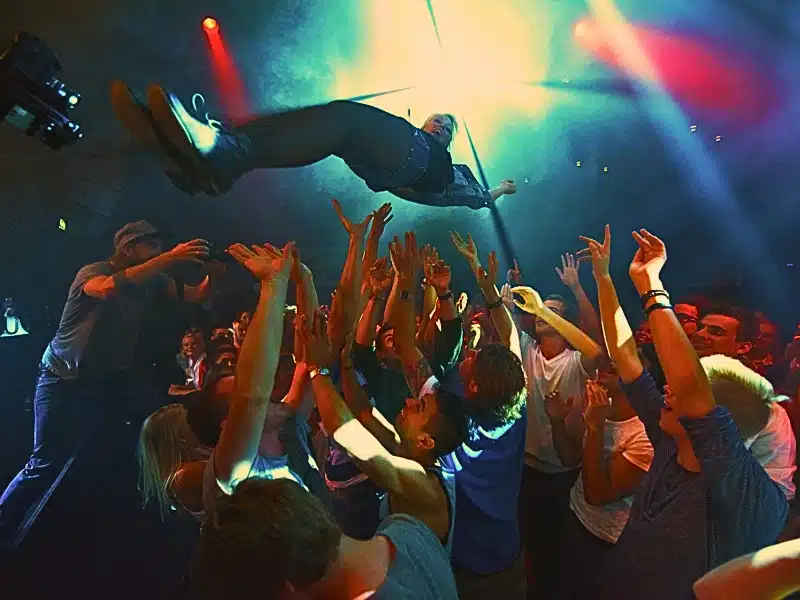
The concerns stem from a recent Sleeping With Sirens concert at Fremont Country Club, where attendees told news outlets they experienced excessive heat, overcrowding, and multiple medical emergencies during the performance. Witnesses described people fainting throughout the venue and said moving through the crowd became increasingly difficult as the show continued.
Those reports do not establish that anyone acted negligently. Whether a venue or event organizer is legally responsible depends on the specific facts surrounding the incident. Investigators would likely examine issues such as occupancy levels, crowd management procedures, staffing, ventilation, emergency response, and whether reasonable precautions were taken before and during the event.
The incident does, however, highlight an important legal question: when unsafe crowd conditions lead to injuries, who can be held responsible?
Who Is Legally Responsible for Crowd Safety at a Concert?
One of the most common misconceptions after a concert injury is that the venue owner is automatically liable. In reality, responsibility often depends on who controlled the property and who was responsible for guest safety during the event.
A venue owner may lease the property to another company that operates the facility. A concert promoter may organize the event and coordinate logistics, while separate contractors handle security, ticketing, medical services, or crowd control. Each party may have different legal responsibilities depending on their role.
For example, if injuries stem from inadequate security staffing, the company responsible for providing security may become part of the investigation. If overcrowding results from poor event planning or exceeding safe occupancy limits, the promoter or venue operator may face greater scrutiny. If dangerous property conditions contributed to the injury, the property owner could also have legal responsibility.
Because multiple businesses often work together to host large events, Nevada law may allow more than one party to share liability when their negligence contributes to the same injury.
When Can a Music Venue Be Liable for Crowd Injuries?
Concerts naturally involve large groups of people, loud music, and energetic crowds. Those factors alone do not make a venue negligent. Instead, liability generally depends on whether organizers failed to address risks they could reasonably anticipate.
Common examples of conditions that may contribute to premises liability claims include:
- Dangerous overcrowding or exceeding safe occupancy limits
- Inadequate security or crowd control personnel
- Poorly managed entrances, exits, or pedestrian traffic
- Failure to respond appropriately to medical emergencies
- Excessive heat, poor ventilation, or other unsafe environmental conditions
The legal question is not whether an injury occurred. It is whether reasonable safety measures could have reduced or prevented the danger.
How Does Nevada Premises Liability Law Apply to Concert Injuries?
Nevada premises liability law requires property owners and others who control a venue to use reasonable care to protect lawful visitors from foreseeable hazards. That duty extends beyond maintaining the physical condition of the property. It also includes addressing operational risks that arise during large public events.
Crowd management is one example of those operational responsibilities. Organizers who expect thousands of attendees may need to evaluate whether security staffing is adequate, emergency exits remain accessible, medical personnel are available, and crowd movement can be managed safely throughout the event.
Not every accident gives rise to a lawsuit. The law recognizes that concerts involve excitement and some degree of inherent risk. The issue is whether those responsible acted reasonably under the circumstances or failed to address dangers they knew, or should have known, could injure guests.
What Determines Liability After a Concert Injury?
Determining who is responsible requires more than identifying where an injury occurred. A thorough investigation examines how the event was planned and managed long before the first guest arrived.
Investigators may review contracts between the various companies involved, staffing levels, security plans, occupancy records, emergency response procedures, surveillance footage, witness statements, and whether prior incidents or safety concerns put organizers on notice of potential problems.
Foreseeability often plays a central role. Large concerts present predictable challenges involving crowd movement, heat, medical emergencies, and evacuation procedures. If those risks were apparent but reasonable precautions were not taken, they may become important evidence in determining liability.
This fact-intensive approach is one reason concert injury cases often involve multiple defendants and require careful analysis of each party’s responsibilities.
What Compensation May Be Available After a Concert Injury?
A serious crowd-related injury can create financial and personal challenges long after the event ends. Depending on the circumstances, an injured person may be able to recover compensation for medical expenses, lost wages, diminished earning capacity, pain and suffering, and other damages recognized under Nevada law.
The amount available depends on several factors, including the severity of the injury, the extent of medical treatment, the long-term impact on daily life, and the evidence establishing liability. Every claim is different, making an individual evaluation important before drawing conclusions about potential compensation.
If you were injured in a crowd-related incident at a Las Vegas venue, you do not have to handle the physical and financial aftermath alone. Nevada’s premises liability laws are designed to protect you, but securing fair compensation requires a thorough investigation into how the event was planned and managed. At George Bochanis Injury Law Offices, we have the experience to hold negligent organizers, venues, and security teams accountable. Contact us today at (702) 388-2005 for a free consultation to discuss your case and learn how we can help.
Frequently Asked Questions
Can I file a claim if I was injured during a crowd surge at a Las Vegas concert?
Possibly. If inadequate crowd management, negligent security, overcrowding, or another preventable condition contributed to your injuries, you may have grounds to pursue a premises liability claim under Nevada law.
Can more than one company be responsible for a concert injury?
Yes. Concerts often involve venue owners, operators, promoters, security contractors, and other businesses. Depending on the facts, more than one party may share legal responsibility for unsafe conditions that caused an injury.
What should I do if I was injured at a Las Vegas music venue?
If you have not already seen a doctor, seek a professional medical evaluation immediately to document any latent injuries, such as concussions, that may not show immediate symptoms. You should also preserve physical evidence, like your concert tickets, wristbands, and any damaged clothing, and write down your timeline of the event while your memory is still fresh. Because insurance adjusters may quickly reach out to offer a low settlement or ask for a recorded statement, it is best to consult a premises liability lawyer before discussing your injuries with third parties or posting details about the incident on social media.