
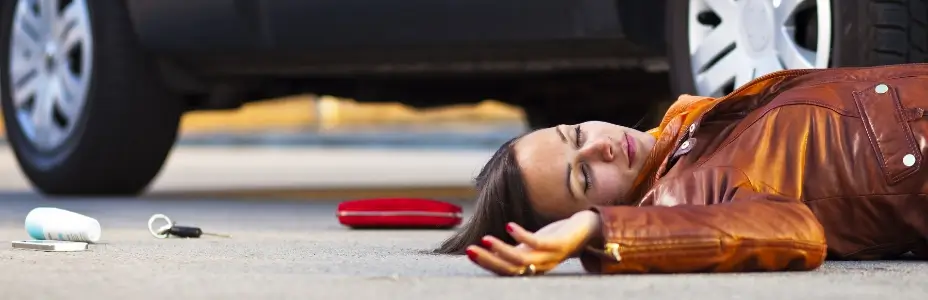
Las Vegas, NV (September 1st, 2026) — When the circumstances of a fatal pedestrian accident raise questions about the actions of both the driver and the pedestrian, fault does not necessarily come down to choosing one person or the other.
A recent fatal Las Vegas crash illustrates why. Police say a pedestrian was crossing Tropicana Avenue outside a marked crosswalk when they were struck and killed. The driver stopped and remained at the scene, but responding officers reportedly observed signs of impairment and arrested the driver on DUI-related charges.
Those facts raise separate questions. Did the pedestrian’s decision about where to cross contribute to the collision? Did the driver’s alleged impairment affect their ability to recognize the danger and react? Could both have contributed?
If your family has lost a loved one in a pedestrian accident, George Bochanis Injury Law Offices in Las Vegas can investigate what happened and explain how Nevada’s fault laws may apply. Call 702-388-2005 to discuss your case.
Key Takeaways
- A recent fatal Las Vegas pedestrian crash involves two potentially important circumstances: the pedestrian reportedly crossed outside a marked crosswalk, and police arrested the driver on DUI-related charges.
- Nevada’s comparative negligence law allows the conduct of more than one person to factor into a claim for injury or death.
- Neither a pedestrian’s actions nor a driver’s DUI arrest necessarily establishes the final allocation of civil fault.
- Determining responsibility requires examining how each person’s conduct contributed to the collision.
- Evidence concerning impairment, visibility, vehicle movement, the pedestrian’s movements, and the crash itself may help establish what happened.
Fatal Tropicana Avenue Crash Raises Questions About Both Sides of a Collision
According to reports, a pedestrian was recently crossing Tropicana northbound outside a marked crosswalk when they entered the path of an approaching Nissan Juke. The vehicle struck the pedestrian, who was pronounced dead at the scene.
The driver reportedly stopped immediately and remained at the scene. Police said responding officers noticed signs of impairment. The driver was subsequently arrested and booked into the Clark County Detention Center on DUI-related charges.
The crash remains under investigation.
That last point matters. Preliminary reports can provide important information about a fatal accident, but they do not necessarily tell the entire story or determine civil responsibility.
Fault in a Pedestrian Accident Is Not Always an Either-Or Question
After a pedestrian accident, people naturally want to know who was at fault. Sometimes the evidence points overwhelmingly toward one party.
Other crashes are more complicated.
Nevada law accounts for that possibility through its comparative negligence system. Under the system, negligence by an injured person, or by a person who died in an accident, does not automatically bar recovery when that negligence is not greater than the negligence of the party or parties from whom recovery is sought.
When recovery is permitted, the amount awarded can be reduced according to the percentage of negligence attributed to the injured person or decedent.
That makes the details of the accident important.
Rather than asking only whether the pedestrian did something wrong or whether the driver did something wrong, an investigation may need to ask a different question: How much did each person’s actions contribute to the collision?
Why One Fact Should Not Decide an Entire Pedestrian Accident Claim
Certain facts can immediately attract attention after a serious crash. The pedestrian was outside a crosswalk. The driver was arrested for DUI. Either fact could become important evidence. Neither should necessarily be treated as the complete answer to what caused the accident.
Crossing Outside a Crosswalk Can Matter Without Deciding the Case
Where and how a pedestrian entered the roadway can affect a fault investigation. An insurer defending a pedestrian accident claim may point to the pedestrian’s actions and argue that they contributed to the collision.
But the analysis should not necessarily stop with the pedestrian.
The driver’s actions before impact also need to be examined. A collision may involve questions about speed, attention, impairment, braking, visibility, reaction time, or other circumstances that affected the driver’s ability to avoid the pedestrian.
A DUI Arrest Can Matter Without Automatically Establishing Civil Fault
The same principle applies to a DUI arrest. Evidence that a driver was impaired can become highly relevant to a wrongful death claim. However, an arrest is not a conviction, and a criminal DUI proceeding is separate from the civil process of determining responsibility for a death.
A Las Vegas wrongful death lawyer investigating the crash may therefore look beyond the arrest itself. The important questions include what evidence supports the allegation of impairment and whether the driver’s condition actually contributed to the collision.
How Do You Determine Each Person’s Role in a Fatal Pedestrian Accident?
Assigning percentages of fault requires understanding the sequence of events leading to impact.
Consider why timing matters. If evidence shows that a pedestrian entered a vehicle’s path so suddenly that a reasonably careful driver had no opportunity to avoid the collision, that could significantly affect the analysis.
Change the circumstances, and the result could look different.
Suppose evidence instead shows that the pedestrian was visible in the roadway long enough for an attentive driver to recognize the danger and respond, but the driver failed to do so. The investigation may then focus more heavily on why the driver did not react.
When impairment is alleged, another question arises: Did alcohol or another substance affect the driver’s perception, judgment, or response? These are fact-specific questions. They cannot reliably be answered by one line in a news report or one allegation following an accident.
Evidence Can Show More Than Who Had the Right-of-Way
A serious pedestrian accident investigation can reconstruct what happened in the seconds before impact. Physical evidence from the scene may help establish where the pedestrian and vehicle were located. Vehicle damage and crash-scene evidence may provide information about the collision itself. Surveillance or traffic-camera footage may show movements that occurred before impact.
Witness accounts may add another perspective. Evidence gathered during a DUI investigation could also provide information about the driver’s condition.
Taken together, this evidence may help answer the questions that matter in a comparative negligence case: What did each person do, what opportunities did they have to avoid the collision, and how did their conduct contribute to the outcome?
That is a more complete analysis than assuming one reported fact settles the question of fault.
Talk to a Las Vegas Wrongful Death Lawyer About a Fatal Pedestrian Accident
A fatal pedestrian accident does not always have one simple explanation.
When evidence raises questions about the conduct of both the pedestrian and the driver, Nevada law provides a way to consider each person’s role.
If your family lost a loved one in a pedestrian accident and there are questions about who was responsible, contact George Bochanis Injury Law Offices in Las Vegas. Call 702-388-2005 to speak with a wrongful death lawyer about the accident and your family’s legal options.
Frequently Asked Questions About Fault in Fatal Pedestrian Accidents
Can an insurance company blame someone who died and cannot give their side of the story?
An insurer may argue that the deceased person contributed to the accident. That makes objective evidence particularly important. Crash-scene evidence, video, witnesses, vehicle information, and other records may help establish what happened without relying solely on one party’s account.
What if the police have not finished investigating the crash?
A pending police investigation does not necessarily prevent a family from speaking with a lawyer about a potential wrongful death claim. A separate civil investigation may also uncover evidence relevant to fault.
Does a driver have to be convicted of DUI before a family can pursue a wrongful death case?
No. A criminal DUI prosecution and a civil wrongful death claim are separate proceedings. The evidence relevant to each may overlap, but a family does not necessarily have to wait for a DUI conviction to explore its civil options.